A Gateway to Care: Ethiopia's Integrated Approach to Clear Vision
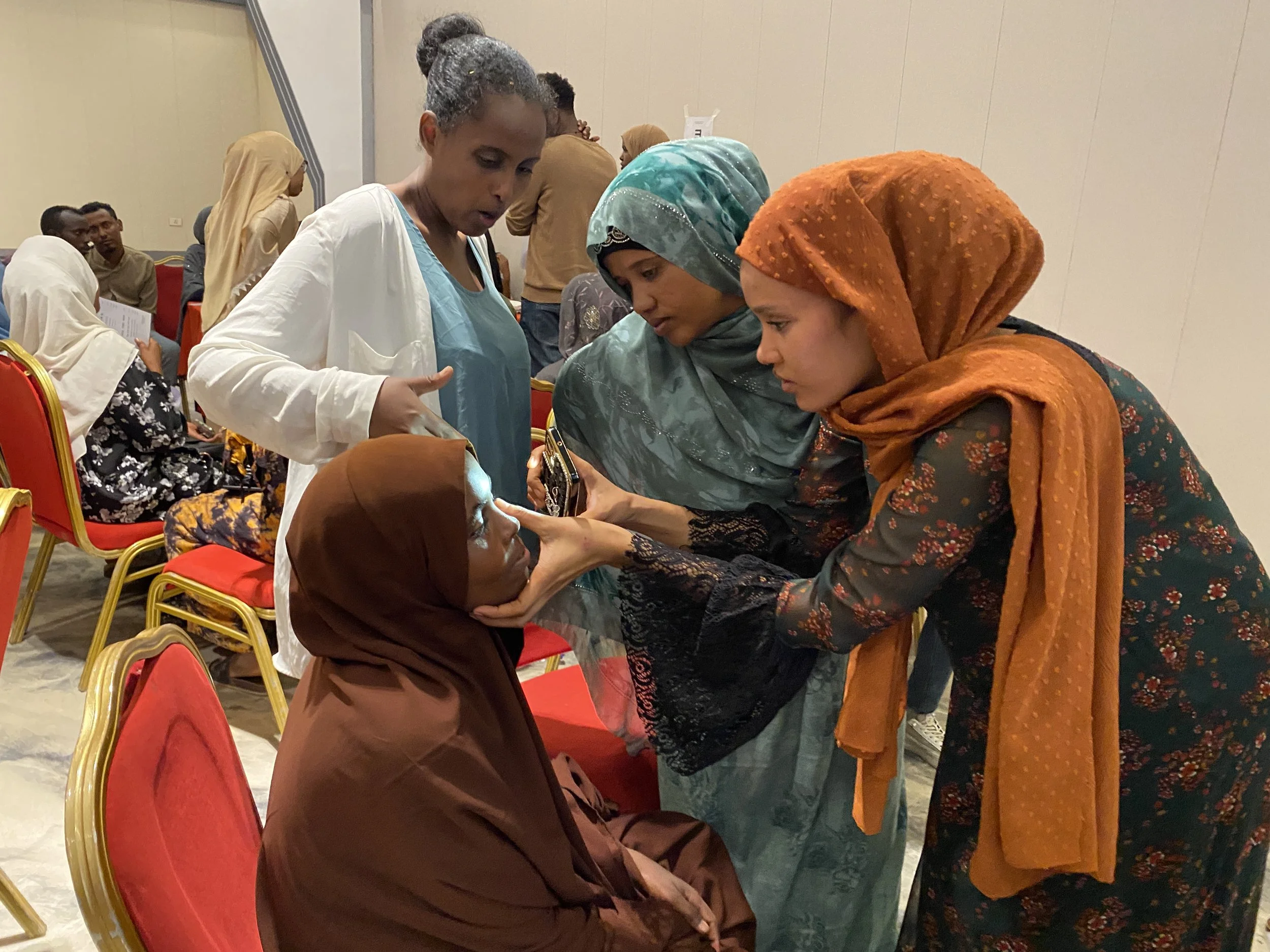
“After the eyeglasses screening and distribution, members of the community who had previously shied away from us began coming for other health services.”
Derartu Ahmed, a health extension worker in Harar, described how expanding the services she provides has changed her ability to serve her community. As part of Ethiopia’s Health Extension Program, she delivers a wide range of preventive and basic curative services. Now that she’s been trained to screen for presbyopia—the gradual age-related loss of near vision—and to distribute near-vision glasses, she is reaching more people and connecting them to other essential services, like cervical cancer screening, tuberculosis treatment, diabetes care, and even vaccinations for their children and grandchildren.
An estimated 14.5 million Ethiopians are living with presbyopia, with 12.5 million lacking access to eyeglasses. This has significant effects on daily life, from reduced income to loss of independence. Derartu’s descriptions of the tangible benefits of near-vision glasses on her community were echoed in the conversations we had with tailors, farmers, teachers, shopkeepers, and homemakers across Ethiopia: near-vision glasses are not a luxury; they are a practical tool for daily life. Glasses make it easier to sort grains, prepare food, grade papers, read religious texts, manage small businesses, and participate fully in work and community life. Restoring near vision improves livelihoods, but it also gives people joy and dignity to be able to do many of the things they love again.
For Derartu, adding near-vision services has also strengthened how she engages her community. She works with community and religious leaders to spread awareness about the integration of near-vision screening and glasses distribution at local health centers—sometimes going village to village with a megaphone herself. She knows that every person who comes in for glasses is an opportunity to provide additional services to. Each screening becomes a broader touchpoint to check for hypertension, diabetes, and other eye conditions that require referral. And each interaction is also an opportunity to build trust with community members, making them more likely to seek out care for other issues.
Today, access to near-vision glasses is expanding across Ethiopia by integrating it into the country’s robust network of health posts run by health extension workers, Ethiopia’s professional cadre of community health workers. Thanks to the work of Last Mile Health (LMH) and the Government of Ethiopia, in partnership with the Livelihood Impact Fund (LIF), screening for presbyopia and the distribution of near-vision glasses is now bundled with screening for non-communicable diseases (NCDs) such as hypertension and diabetes. In this way, health extension workers are not only addressing the relatively easy-to-solve issue of near-vision loss but have also identified other underlying health conditions and connected more people to care. By embedding near-vision services into an existing public health system, Ethiopia is demonstrating how a simple, affordable intervention can be delivered at scale.
This playbook shares lessons from Ethiopia’s experience—highlighting what made integration possible, the operational challenges encountered, and the strategies that helped align government systems, distribution logistics, and community demand. It offers insights for other countries seeking to expand access to near-vision glasses through sustainable public-sector approaches.
What Makes It Work
A Playbook from Ethiopia
The demand for near-vision glasses is high, with an estimated 10 million Ethiopians living with uncorrected presbyopia. Ethiopia demonstrates how near-vision glasses can scale through public health systems when they are embedded in an existing national platform rather than delivered as a standalone campaign. Key actions to make that scale possible include:
Integrate presbyopia into the public health system.
Near-vision screening and glasses distribution are delivered through routine primary care rather than periodic campaigns, allowing services to reach more communities while reducing delivery costs.Leverage a salaried community health workforce.
Presbyopia services are delivered by health extension workers—government employees already embedded in communities and trusted as frontline providers. Ethiopia’s robust network of health extension workers and health posts have proven to be the most effective way to reach the country’s majority rural communities and expand access to healthcare.Embed presbyopia within existing NCD services.
Presbyopia screening is integrated into the broader non-communicable disease package alongside hypertension and diabetes checks. As a result, people who come for glasses are also screened for other conditions—like diabetes and hypertension, which often also affect populations over 40 years old. This natural pairing has allowed health extension workers to detect additional health problems and connect patients to care.Use blended training integrated into broader health training systems.
Digital lessons combined with hands-on practice reduce training costs while enabling scalable learning and easier updates.Deliver services through a nationwide network of health posts.
Ethiopia’s dense network of rural health posts allows glasses to be distributed through facilities communities already use, enabling last-mile access without building new infrastructure.Use glasses as an entry point to primary care.
Because glasses are a valuable and immediately useful commodity, they attract people to health posts, where health extension workers can detect additional NCDs and vision conditions and refer patients for further care.
Together, these elements show that scaling near-vision glasses distribution does not necessarily require creating new delivery systems. In fact, implementers can often reach more communities when services are embedded within systems that already exist, as Ethiopia’s experience demonstrates. By building on government infrastructure, workforce, and services already trusted by communities, Ethiopia has created a model for delivering near-vision glasses that is both sustainable and capable of scaling nationally. This playbook distills the key lessons from that experience to help other countries adapt and apply similar approaches to expand access to vision care.
Public-Sector Integration:
Unlocking Scale
Ethiopia’s approach shows how near-vision services can scale when they are embedded within an existing public health system rather than delivered as a standalone program. Integration into existing government programs enables services to reach communities through a platform that is already trusted and widely used. Dr. Hiwot Solomon Tafesse, the country’s Head of Disease Prevention and Control, was enthusiastic about integrating presbyopia into the Health Extension Program in Ethiopia. “It is 100% governed by the government,” she said. “They are on the government payroll. They trained and also recruited and paid their regular salary from the government budget. That kind of commitment should be in place for the sustainability of a program.”
Integrate presbyopia into routine primary care services. Bundling glasses with other NCD services deepens community engagement with the health system and creates opportunities to detect additional health conditions.
Individuals who come for near-vision screening are also checked for hypertension, diabetes, and other eye conditions, which are referred to higher-level facilities when identified. Health extension worker Nebat Abdi shared that more people come in because they are giving glasses for free, and when they come for glasses, “we can do more health promotion and screen for other diseases as well.”
Integrating glasses into routine services also brings new patient groups into health posts—particularly men and older adults who may not typically seek care from health extension workers.
Embedding presbyopia within the broader health training curriculum also expands access to different funding streams. In Ethiopia, integrating presbyopia training into health extension workers’ training, which also includes HIV, TB, and malaria in addition to NCDs, allowed the government and Last Mile Health to use Global Fund-supported training programs rather than securing separate funding for eye care. Abraham Zerihun, Ethiopia country director at Last Mile Health, described the ability to access more sources of funding as “powerful examples of integration and bundling.”
Leverage existing health infrastructure to reduce costs and expand reach. Ethiopia’s nationwide network of health posts makes distributing near-vision glasses more efficient by using facilities communities already know and trust. This approach lowers delivery costs while expanding access, helping ensure glasses reach even remote communities at the last mile.
By integrating presbyopia screening and glasses distribution into routine services at these posts, the program can reach rural and hard-to-reach communities without building new infrastructure.
Delivering glasses through everyday care—rather than relying only on outreach events—reduces operational costs and makes distribution more consistent and scalable.
Eyeglass recipients, such as Aster Zirihun, who provides training to farmers, are already receiving services from health extension workers, so adding near-vision screening to their bundle of services builds on existing relationships.
The Health Extension Program has a structured supervision system. Supervisors such as Alem Ketema and Fahmi Aliyi Tahir support health extension workers by overseeing service delivery, guiding referrals, and ensuring that care is provided consistently across health posts.
Invest in scalable training programs to enable national rollout. Training systems must be designed to reach thousands of health workers efficiently while maintaining quality. Approaches that are affordable, easy to update, and practical for frontline workers are critical for scaling services nationwide.
Ethiopia adopted a blended training model that combines digital modules with hands-on orientation and practical skills sessions. This approach allows health extension workers to learn core concepts through multimedia tools on their own time and then come together to practice screening and dispensing skills in-person.
The blended approach significantly reduced costs—by roughly 40 percent—while making training easier to update and deliver at scale.
Digital modules can be updated without reprinting materials, and workers can revisit lessons when needed. They also spend less time away from service delivery. For this reason, the Ethiopian Ministry of Health has approved the model for nationwide refresher training.
Use glasses to strengthen trust in community health workers. Providing near-vision glasses allows health extension workers to solve a problem on the spot rather than simply referring patients elsewhere.
The tangible and immediate benefit—being able to read, work, and perform daily tasks more easily—builds confidence in health workers and strengthens their reputation as capable providers.
Several health extension workers described community members expressing surprise and appreciation when they could receive glasses directly at the health post, with some even asking whether they were now “like doctors,” reflecting a growing perception of their skill and capability.
Coordinate closely with government to embed services. Scaling distribution across the country—reaching 10 million people—requires close collaboration between government and implementing partners, particularly in the early stages. As Dr. Hiwot Solomon Tafesse noted, “There is huge demand for eyeglasses, and that really needs support and continued partnership.”
Working closely with ministries and health authorities helps ensure presbyopia screening and glasses distribution are integrated into national systems for training, supervision, and service delivery.
Last Mile Health works closely with the Ministry of Health to support training, implementation design, and operational logistics. LMH doesn’t have separate goals, but rather aligns programming to support the government’s national health priorities.
Over time, this approach supports a transition to full government ownership and management, allowing the program to be sustained and scaled as part of the public health system.
Demonstrate results to build support. Government support for integrating presbyopia services strengthened when three elements aligned: strong clinical safeguards, visible community impact, and clear evidence from pilots.
Early implementation data, which showed increased uptake of NCD screening, accurate identification and referral of serious conditions, strong patient satisfaction, and cost efficiencies from the blended training model, were used to gain confidence among government leaders and professional stakeholders.
According to Israel Ataro, who leads primary health care and community engagement at the Ministry of Health, the many stories of impact among recipients have played an important role in mobilizing government support. Accounts of improved livelihoods, greater independence, and better quality of life help demonstrate the value of the program and motivate stakeholders to support its expansion.
While integration into the health system enables scale, community demand ultimately determines how quickly services expand.
Demand:
Leveraging Word-of-Mouth from Trusted Sources
Demand for near-vision glasses in Ethiopia is high, and word of mouth is the primary driver of awareness. Once early recipients begin wearing glasses and sharing their experiences, interest spreads quickly and health posts often see large crowds. According to Etsegent Arega, Senior Program Manager at Last Mile Health, people report finding out about the glasses from others in their communities—friends, neighbors, and community leaders. “That word of mouth is very helpful, because we see the number increasing significantly. Once they see someone else receiving it, once they see someone else is happy with eyeglasses, we get more community members coming in.”
Health posts also report large crowds and strong enthusiasm once the service becomes visible in communities. Even though screening is integrated into routine care, initial distribution kickoffs often turn into large events where turnout exceeds expectations.
Partner with religious and community leaders to spread awareness. Trusted local leaders can quickly share information and encourage people to attend screenings.
Health extension workers work with community leaders so they can relay information to residents.
In Harar, health extension workers conduct outreach through mosques, where respected figures such as sheiks and elders share information with community members and encourage them to attend screenings.
People trust information more when it comes from respected community members, which helps awareness spread faster.
Harness visible community examples to accelerate uptake. Seeing the benefits of glasses firsthand is one of the most powerful drivers of demand.
When community members see neighbors, leaders, or early recipients wearing glasses and performing daily tasks more easily, interest spreads quickly. Day laborer and village health leader Kemal Ibrahim shared. “When I’m reading and people see my glasses they ask me where I got them and I tell them about it.”
Program staff observed turnout increasing after the first wave of recipients began wearing glasses in the community. Visible impact—people reading clearly again, using phones, or working more easily—encourages others to seek screening.
Uptake is driven more by interpersonal trust and visible examples of success within the community.
Plan for demand surges as awareness spreads. As word of mouth grows, health posts are sometimes surprised by the number of people coming to receive services. Preparing for these surges helps ensure services continue running smoothly.
Strong demand in Ethiopia is a major asset, but it can also create operational challenges for health posts. Health extension workers such as Filsen Abadir noted the need for better crowd management plans to handle the large number of community members arriving at once after hearing about the service.
Although the goal is to provide glasses through routine services, early distribution periods often bring large crowds as word spreads. Planning for these surges—through additional staffing, adequate inventory, and simple queue or scheduling systems—can help avoid service disruptions and support health workers.
While integration into the health system enables scale, community demand ultimately determines how quickly services expand.
Supply, Distribution, and Logistics:
Keeping Pace with High Demand
Expanding access to near-vision glasses across Ethiopia requires strong operational systems to move glasses through regulatory channels, distribute them across a geographically dispersed country, and keep health posts stocked. With an estimated 10 million people in need of near-vision correction, reliable supply chains and last-mile delivery are essential to scale. Strengthening these systems—while leveraging existing public health infrastructure—helps ensure glasses reach all communities that need them.
Secure a reliable and continuous supply of glasses. Strong demand means more glasses are needed. Finding ways to expand supply is critical to meeting demand and maintaining trust in the service.
Maintaining a steady supply of glasses is needed to meet demand and sustain distribution at scale. Many health extension workers and government officials highlight the need to increase supply to meet community demand. As Dr. Hiwot Solomon Tafesse put it, “There is no pipeline to fulfill the entire need.”
Increasing supply through partnerships—combined with reliable sourcing, forecasting, and regular restocking—helps ensure health posts can provide glasses through routine services rather than intermittent campaigns.
Navigate regulatory systems early and build logistics partnerships. In Ethiopia, importing and distributing glasses requires approvals from multiple authorities—including the Food and Drug Administration, the Ministry of Health, customs offices, police, and district-level officials—because glasses are treated as medical devices. Successfully moving glasses through this system requires strong relationships and sustained coordination.
Engaging regulators early—and helping them understand both the scale of demand and the immediate benefit of near-vision correction—helps program implementers accelerate approvals and build support.
LMH worked closely with the Ministry of Health and other agencies from the beginning of the program, rather than introducing glasses distribution as an external project. Early involvement helped government officials understand how the intervention fit within the broader health system and reduced resistance to task-shifting to health extension workers.
LMH used a creative strategy to build institutional support by screening and distributing glasses to staff within government agencies—such as customs officials—so that they could personally experience the benefits of near-vision correction. When officials immediately saw the difference that glasses made, skepticism shifted to enthusiasm and support.
Design last-mile delivery systems that reduce costs and expand reach. Remote health posts can distribute glasses, but getting the glasses to the health posts in the first place is not easy. It can be logistically difficult and expensive.
Using existing transport networks and local infrastructure can make delivery more reliable and affordable. LMH has tried delivering glasses across difficult terrain through multiple channels, including cars, motorcycles, and in some areas, donkeys.
Partnerships and existing infrastructure can help address these challenges. For example, Etsegent Arega discussed a recently signed memorandum of understanding with the Ethiopian Post Office that is expected to improve delivery efficiency and safety, while existing health post networks help ensure glasses reach rural communities.
Treating logistics as a core part of program design helps ensure the system remains financially and operationally sustainable at scale.
Provide clear user guidance for real-world use. People use near-vision glasses while working, reading, cooking, and using mobile phones. Programs should ensure both product design and user guidance match real-world use.
Several recipients reported being told not to wear their glasses outdoors, which led them to avoid using them during daily work. For example, farmers Zebida Ibro and Edris Yusuf both recalled being advised not to wear their glasses outside, even though they would like to use them while working.
These experiences indicate the importance of real time iteration to improve programming and ensure that recipients understand how to use the glasses in ways that support their daily activities.
Opportunities to adapt product design with how people actually use glasses throughout the day should be explored.
Conclusion:
Scaling Presbyopia Care Through Public Health Systems
Ethiopia’s experience shows that expanding access to near-vision glasses does not require building entirely new delivery systems. Instead, it demonstrates how a simple intervention can scale when it is embedded within existing public health infrastructure. By integrating presbyopia screening into the Health Extension Program—which leverages an existing cadre of trained health workers and a nationwide network of community health posts—the country is making clear vision accessible to communities across both urban and rural areas, including at the last mile. Bundling near-vision screening with non-communicable disease services such as hypertension and diabetes checks also means that each glasses encounter is an opportunity to identify and treat additional health conditions.
At the same time, Ethiopia’s experience highlights an important caveat: the program’s success is at least partially dependent on the strength of the existing public health infrastructure. With more than 43,000 salaried health extension workers deployed across the country and a dense network of government-run health posts reaching even the most remote communities, Ethiopia has a strong foundation that enables delivering services at scale. Rather than building a parallel system, the glasses program plugs into this existing infrastructure, allowing distribution to happen through routine primary care rather than temporary campaigns.
The lessons from Ethiopia point to several principles for other countries: integrate services into routine care, leverage existing health workers and facilities, cultivate strong government partnerships, engage community and religious leaders who help spread awareness through trusted networks, and build reliable supply and distribution systems. Where similar public health platforms exist—or can be strengthened—near-vision glasses can be delivered efficiently and sustainably, helping more people improve livelihoods, restore independence, and expand access to primary health care.