
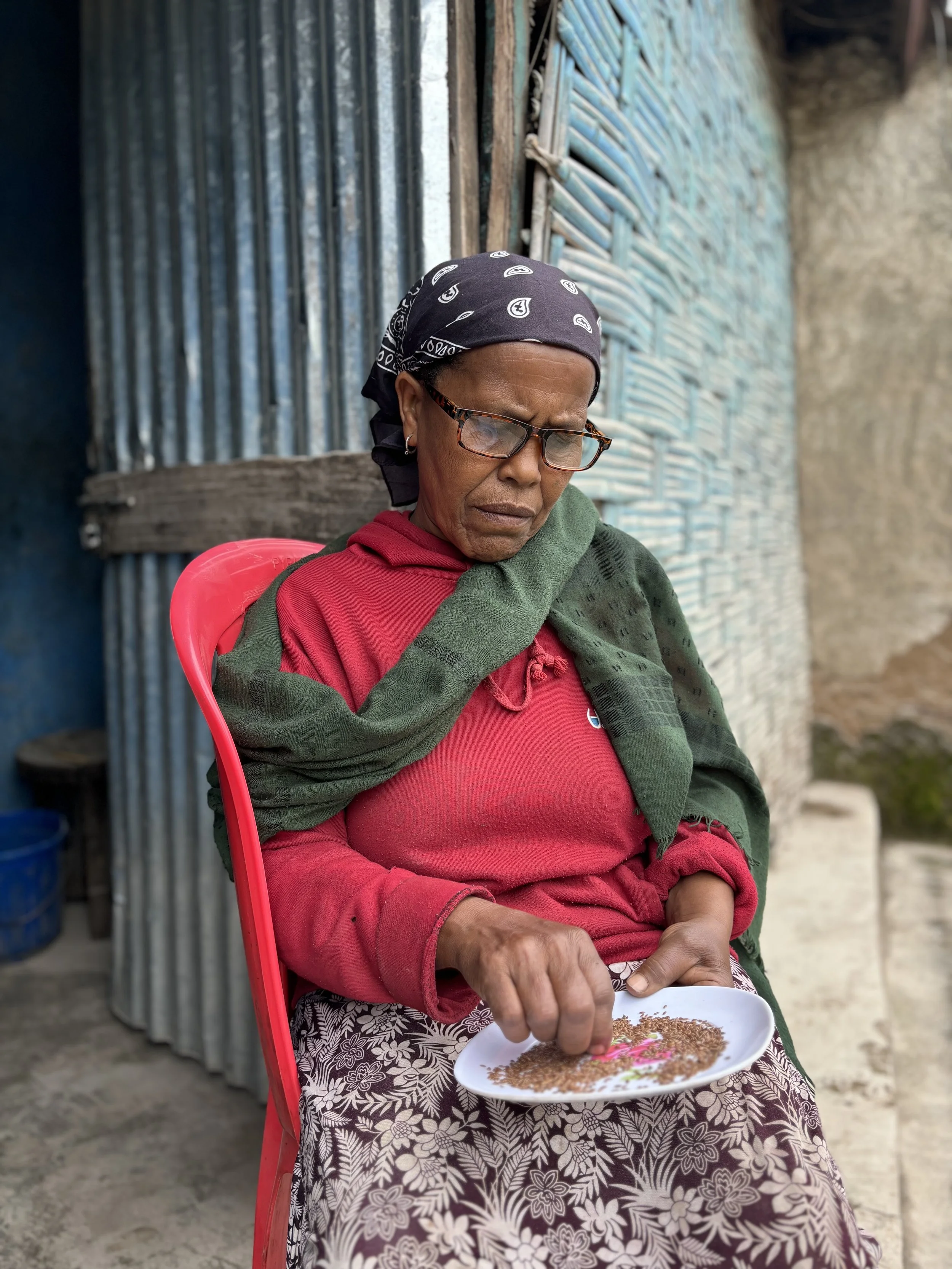
Opinion: Reading glasses may be the most cost-effective, under-leveraged tool in global development — and unlike most interventions, the right investment now could create a self-sustaining market that philanthropy won't need to fund forever.
By Abigail Steinberg, Rollo Romig
21 September 2026
Originally featured on Devex
There are over 800 million people in largely low- and middle-income countries who earn much less than they should because they can’t see up close. The fix — simple reading glasses — costs less than $1.50 to manufacture and ship to the places they’re most needed, and yet for decades, the global development sector has largely looked past them.
Presbyopia, the gradual, age-related loss of near vision, is one of the most widespread and consequential conditions in global health. Over 80% of people 40 and over will develop this problem. It limits people’s ability to read, sew, sort crops, manage finances, and perform the close-range work that constitutes most informal and agricultural labor. The people bearing this burden are largely the same populations that global development philanthropy exists to serve: smallholder farmers, garment workers, tea pickers, and craftspeople.
In 2019, uncorrected presbyopia cost LMICs an estimated $54 billion in lost productivity. One estimate puts the achievable productivity gains from addressing presbyopia at $1.05 trillion by 2050. The evidence for what happens when people get glasses is unambiguous. A randomized controlled trial among tea pickers in Assam, India, found that reading glasses increased daily harvest by 22% on average, rising to 32% for workers over 50. Research in Bangladesh found that first-time glasses wearers saw median monthly income rise by roughly 33%. A study of seasonal coffee harvesters in Guatemala found a benefit-cost ratio of nearly 11 to 1. These are not marginal gains; for the world's most precarious workers, restored near vision can mean the difference between full employment and quitting a job entirely. The question is why this problem has been ignored for so long.
The barriers to closing the gap are solvable
Part of the answer is perception. Reading glasses might not sound as urgent as vaccines or malaria nets, but that view misreads the scale of the problem, the profile of the people it affects, and what people are using reading glasses for. In communities where near-vision work is central to daily economic life, losing near vision isn’t a matter of convenience, it is an economic emergency. A better name for reading glasses would be “earning glasses.”
Another part of the answer lies in addressing market failure. In high-income countries, reading glasses are an easy-to-get, off-the-shelf commodity, available at neighborhood pharmacies or online for a low cost. That normalization happened through decades of investment, distribution infrastructure, and consumer familiarity. In most LMICs, that infrastructure simply doesn’t exist yet. Glasses aren’t sold where people shop; awareness of ready-made glasses as a solution to near-vision loss is low; and the personnel trained to screen and dispense have historically been limited to specialist settings that most people never reach.
What the evidence now shows — from programs run by organizations including Clinton Health Access Initiative, Last Mile Health, Evidence Action, Maisha Meds, and others, and from field research conducted across Ethiopia, Nigeria, and elsewhere — is that these barriers are solvable by shifting the tasks of screening and distribution to community health workers and other nonspecialist cadres. Critically, once people experience the benefits of restored vision, they’re also willing to pay for them. Long-term follow-up studies across India, Pakistan, and Sierra Leone show that several years after initial distribution, over 85% of recipients are still wearing glasses, and most who needed a replacement pair purchased one out of pocket.
The best philanthropy puts itself out of business
The philanthropic investment needed to seed this market is not an indefinite commitment. This is what makes reading glasses unusual among global health interventions. Most programs that work require sustained external funding to keep working. Glasses, once a market is normalized, begin to sustain themselves. Recipients become paying customers. Private sector providers follow demand. Governments integrate screening into existing health infrastructure. The need from philanthropy is to fund the conditions for a self-sustaining system.
That tipping point is closer than it appears. After three years of piloting and refining glasses distribution models across multiple countries, the Livelihood Impact Fund’s Eyeglasses Initiative is becoming the Vision Action Fund — a focused effort to scale what’s been proven to reach even more people and make an even greater impact. Working through government health systems, community networks, and private sector partners, the goal is to get glasses to enough people in enough places that demand becomes self-sustaining. The aim is not to fund glasses distribution forever but to fund it long enough with a target of significantly closing the access gap within a decade.
For funders who weigh interventions by their cost-effectiveness, their evidence base, and their potential to become self-sustaining, reading glasses are hard to beat. The number of affected people is enormous, the solution is proven, the cost is remarkably low, and the market is ready. Unlike most opportunities in global development, this one has a finish line.
Interested in learning more or getting involved? Please reach out to us at VAF@Lifund.org